How to Surf Backside

Neptune
April 10, 2026

The Half of Surfing Most People Ignore
Roughly half the waves at any break peel onto your backside.
If you only surf well frontside, you are giving away half the lineup.
Most surfers accept this without questioning it. Frontside feels natural. You can see the wave face. Your chest is open to the wall of water. Everything about it is intuitive. Backside? Your back is to the wave. Your vision is limited. Your body wants to rotate the wrong way. It feels fundamentally wrong.
But here's the thing: backside surfing only feels wrong because you haven't trained the correct mechanics. Once you understand the body positioning, the visual cues, and the specific drills that build backside competence, the gap between your frontside and backside closes faster than you'd expect.
Some of the most iconic maneuvers in surfing history happened on the backhand. Kelly Slater's backside barrel riding at Pipeline is legendary. John John Florence's backside airs defy physics. And at the everyday level, the surfer who can rip both ways is always the most versatile person in the lineup.
This guide breaks down exactly how to develop your backside game — from the fundamental body position through advanced turns and barrel riding.
Why Backside Feels So Unnatural
Before jumping into fixes, it helps to understand why backside surfing is inherently more difficult. There are three core reasons:
Limited Visual Access
Frontside, your eyes naturally face the wave. You can see the section ahead, read the lip, and anticipate what the wave is about to do — all without turning your head. Backside, the wave is behind you. To see what's coming, you need to actively rotate your head and upper body to look over your trailing shoulder. Most beginner and intermediate surfers don't do this enough, so they're essentially surfing blind.
Counterintuitive Rotation
When you turn frontside, your chest opens toward the wave face. This feels expansive and stable. When you turn backside, you need to compress your body and rotate away from the wave to engage your rail. This compression feels unnatural, especially under the pressure of a moving wave.
Weaker Rail Engagement
On your backside, your toes drive rail pressure through your toeside rail. For most people, calf and toe-driven engagement is weaker and less precise than the heel-driven pressure used on frontside turns. This means backside turns tend to feel less powerful and less controlled until you specifically train that muscle engagement.
Understanding these three challenges is the first step to overcoming them. Every technique in this guide addresses at least one of them directly.
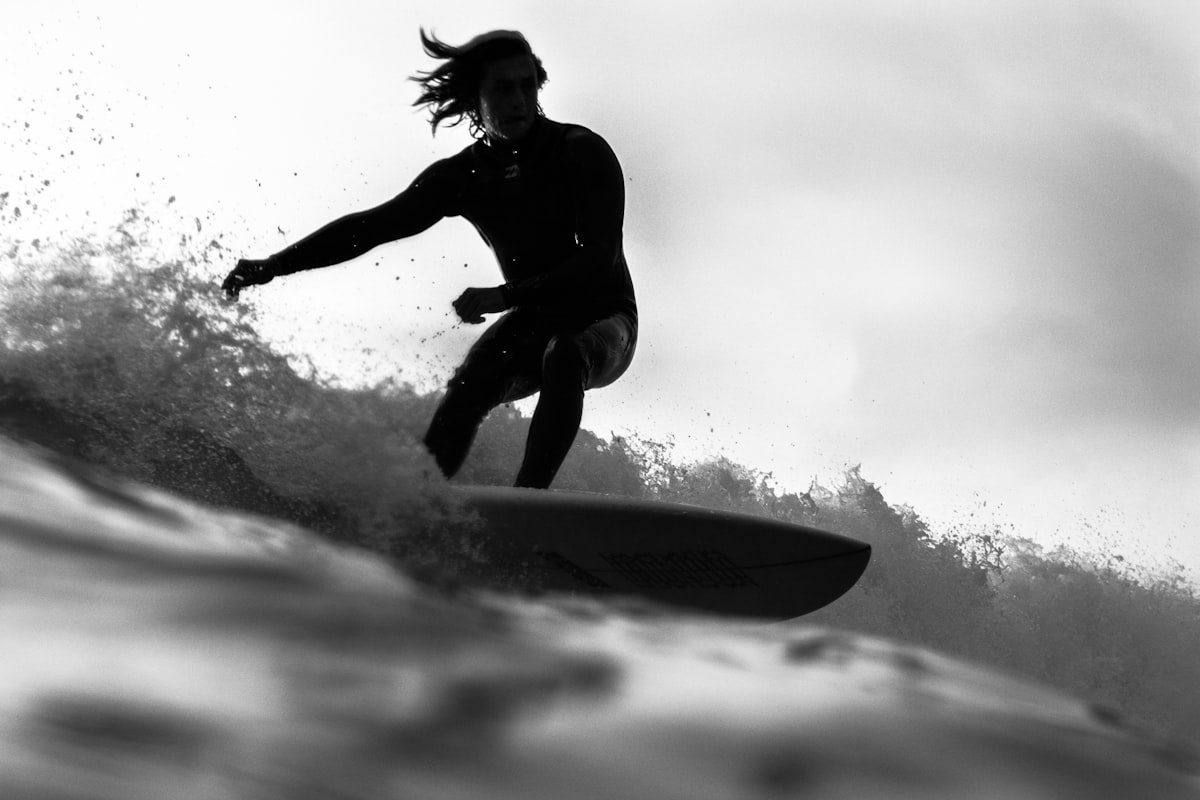
The Foundation: Backside Body Position
Everything in backside surfing starts with body position. Get this right and the turns, speed, and wave reading follow naturally. Get it wrong and no amount of effort will compensate.
Head and Eyes
This is the single most important element. On your backside, your head position determines everything else your body does. The rule is simple: look where you want to go, not where you are.
When you take off on a backside wave, immediately turn your head to look down the line over your trailing shoulder. If you're a regular footer going right, you're looking over your right shoulder. Goofy going left, over your left shoulder.
Your body follows your head. When you look down the line, your shoulders naturally rotate to open up toward the wave face. When you look down at your board or straight at the beach, your shoulders close off and you lose connection with the wave.
Practice this on land first. Stand in your surf stance and rotate your head to look behind you over your trailing shoulder. Feel how your shoulders and hips follow. That rotation is what drives every backside maneuver.
Shoulders and Torso
Your leading shoulder should point roughly down the line — toward the direction you're traveling. Your trailing shoulder drops slightly and rotates back toward the wave face. Think of it as "opening the door" to the wave. This rotation does three things:
- It lets you see the wave face and read what's coming
- It pre-loads your body for turns
- It keeps your weight centered over the board rather than falling toward the beach
A common mistake is keeping your shoulders square to the nose of the board. This might feel stable, but it locks you out of any meaningful turning ability and kills your peripheral vision of the wave.
Hips and Lower Body
Your hips follow your shoulders, but with a slight delay — this is where the power comes from. Think of your upper body as the steering wheel and your lower body as the engine. Your head and shoulders initiate direction, your hips and legs drive the power.
On your backside, keep your knees bent and your weight centered between your feet. A common error is leaning too far onto your back foot, which buries the tail and stalls the board. Another common error is standing too upright, which raises your center of gravity and makes you unstable.
The ideal position is a compressed, athletic stance — like a boxer or a tennis player ready to move in any direction. Low center of gravity, knees bent, weight distributed, head up and looking down the line.
Hand Position
Your leading hand extends slightly in the direction of travel, acting as a pointer. Your trailing hand stays lower, closer to your hip. Some surfers let their trailing hand drag in the wave face on backside — this is fine for style and can actually help with balance, but don't rely on it as a crutch. Your hand in the wave should be a choice, not a necessity.

Building Backside Speed
Speed on your backside comes from the same place as frontside speed — pumping and using the wave's energy — but the mechanics are slightly different.
The Backside Pump
Frontside pumping uses a natural up-and-down compression that most surfers develop intuitively. Backside pumping requires the same vertical movement, but your weight shift goes from toe to heel rather than heel to toe.
Here's the sequence:
- Top of the wave: Extend your legs slightly and shift weight to your heels, engaging your heel-side rail. This angles you down the wave face.
- Bottom of the wave: Compress your legs and shift weight to your toes, engaging your toe-side rail. This angles you back up the face.
- Repeat: The rhythmic transfer between toe and heel rail generates speed through the wave's energy.
The key difference from frontside is that your toe-side rail engagement (the bottom turn portion) requires you to compress and drive through your toes and the balls of your feet. Many surfers are weak here because everyday life doesn't demand much from this movement pattern. Calf raises and balance board training directly address this.
Reading the Wave for Speed Zones
On your backside, you can't see the wave face as easily, which means you need to develop a different kind of wave awareness. Instead of visually scanning the wave in your natural field of vision, you need to combine quick head checks over your shoulder with a feel for what the wave is doing beneath you.
Pay attention to:
- The pull of the water beneath your board: When the wave is steepening ahead of you, you'll feel an acceleration. Use this as a cue to set up your next maneuver.
- Sound: A backside wave breaking behind you creates a distinctive sound. Learn to read the roar of the lip and the hiss of whitewater to gauge how close the breaking section is.
- Peripheral vision: Even without turning your head fully, your peripheral vision on your trailing side can pick up changes in the wave's shape. Train yourself to use this.
Working on your surf technique? Partner with Neptune on iPhone and Apple Watch.
Get on iOSThe Backside Bottom Turn
The bottom turn is the foundation of all wave riding, and on your backside it's where most surfers lose the most performance compared to their frontside. A weak backside bottom turn means weak everything else — weak top turns, no barrel time, and constant loss of speed.
Setting Up the Turn
As you drop down the face, your weight should be centered with a slight emphasis on your front foot to maintain speed. Your eyes should already be looking where you want to go — back up the wave face.
Initiating the Turn
Drive through your toes and the balls of your feet. This engages your toe-side rail and begins carving you back toward the wave face. At the same time, rotate your head and leading shoulder toward the lip. Your hips will follow.
The common mistake here is trying to muscle the turn with your legs alone. The turn should be initiated from the top down: head, shoulders, hips, then legs. Your lower body provides the power, but your upper body provides the direction.
Depth and Timing
How deep you take your bottom turn depends on what you want to do next. For a standard re-entry or top turn, a moderate bottom turn that sets you up at a 45-degree angle to the lip is ideal. For a barrel, you want a shallower bottom turn that keeps you high and tight in the pocket.
Timing matters too. Start your bottom turn too early and you'll outrun the wave. Start too late and the lip will catch you. Watch the section ahead — which means turning your head — and time your bottom turn to arrive at the base of the wave just as the section ahead starts to pitch.
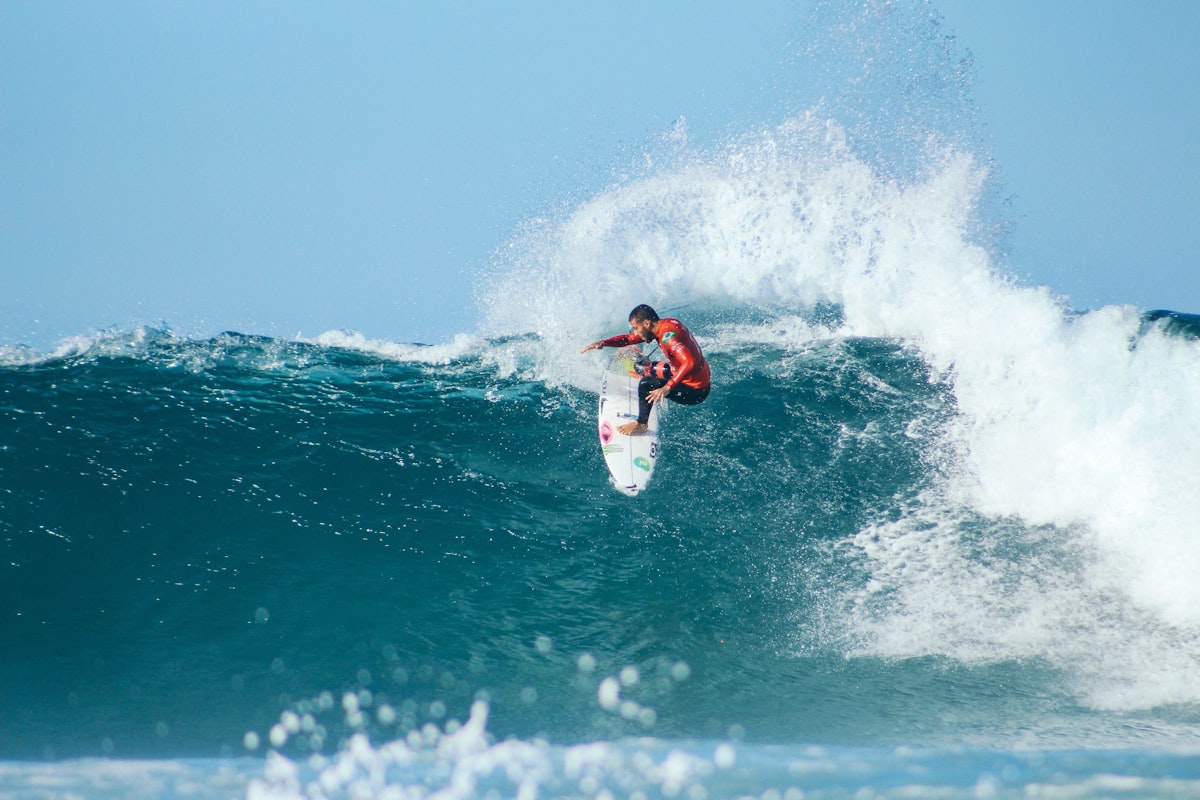
The Backside Top Turn
Once you have a solid bottom turn, the backside top turn becomes much more accessible. There are several variations, from a simple redirectional turn to a full backside snap.
The Redirectional Top Turn
This is the bread-and-butter backside top turn and the one you should master first. After your bottom turn carries you up the face:
- As you approach the top of the wave, shift your weight to your back foot
- Rotate your head and shoulders back toward the bottom of the wave — you're now looking where you came from
- Push through your heels to engage your heel-side rail
- Let the turn arc you back down the face
- As you complete the turn, shift weight forward again to maintain speed
The key to a good redirectional turn is smooth weight transfer. Jerky movements kill speed and control.
The Backside Snap
The snap is a sharper, more aggressive version of the top turn. Instead of a smooth arc, you're breaking the fins loose and pivoting the board sharply.
To snap on your backside:
- Take a harder, more vertical bottom turn to approach the lip with more speed and angle
- As your fins reach the lip, apply sharp pressure through your back foot while simultaneously rotating your shoulders hard in the new direction
- The tail breaks free and the board pivots around your front foot
- Re-engage the rail by shifting weight forward and compressing through your legs
Backside snaps require confidence and commitment. Half-hearted attempts result in an awkward stall at the top. Commit to the rotation and trust that the board will follow your body.
Backside Barrel Riding
Getting barreled on your backside is one of surfing's greatest challenges — and greatest rewards. Pipeline, the most famous wave in the world, is a backside barrel for regular footers. The skill is worth pursuing.
The Setup
Backside barrels require a specific takeoff. You need to be deep — close to the peak where the wave is steepest. Your takeoff should angle you slightly into the barrel rather than down the line. This is counterintuitive because every instinct says to race the wave, but in a barrel, you need to slow down and let the wave come to you.
Body Position in the Tube
Once inside, your body position is everything:
- Crouch low: Lower than you think. Your trailing hand can grab your outside rail for stability.
- Head turned: Look out the mouth of the barrel. This keeps your shoulders open and your body aligned with the tube.
- Weight centered: Don't lean too far forward (you'll outrun the barrel) or too far back (you'll get clipped by the lip).
- Slight toe pressure: Maintain gentle engagement with your toe-side rail to keep a high line in the tube.
The Stall
Often you need to slow down to stay in the barrel. Backside stalls can be done by:
- Dragging your trailing hand in the wave face
- Applying slight back-foot pressure to sink the tail
- Straightening your legs slightly to present more of your body to the wave's push
The key is subtlety. Small adjustments keep you in the tube. Big movements knock you out of it.
Drills to Improve Your Backside
On Land
Mirror training: Stand in your surf stance in front of a mirror. Practice rotating your head and shoulders to look over your trailing shoulder. Do this for two minutes daily. It sounds simple, but this movement pattern needs to be automatic in the water.
Balance board toe-side holds: Set up a balance board and practice holding your balance while shifting weight to your toes. Time yourself. This directly translates to backside rail engagement.
Calf raises: Three sets of twenty, daily. Strong calves drive toe-side pressure, which is the foundation of backside rail control.
In the Water
Backside-only sessions: Dedicate entire sessions to only catching backside waves. This forces you to develop comfort and removes the temptation to default to your frontside.
Exaggerate the head turn: For your next ten backside waves, consciously over-rotate your head to look down the line. You almost certainly aren't turning your head enough. Exaggeration in practice leads to correct positioning in performance.
Bottom turn focus: Spend a session where your only goal on backside waves is a clean, powerful bottom turn. Don't worry about what happens after. A strong bottom turn will naturally set up everything else.

Common Backside Mistakes and Fixes
Mistake: Looking at the Beach
The problem: Your eyes are pointed toward shore instead of down the line. Your body follows your eyes, so you end up straightlining or making weak, directionless turns.
The fix: Before every backside takeoff, tell yourself "look down the line." Make it a mantra. The head turn should happen within the first second of your pop-up.
Mistake: Standing Too Tall
The problem: An upright stance raises your center of gravity and disconnects you from the board. Turns feel weak and you lose balance easily.
The fix: Bend your knees more than feels natural. Your chest should be closer to your front knee than to standing upright. Film yourself if possible — most surfers think they're lower than they actually are.
Mistake: Stiff Upper Body
The problem: Your shoulders stay locked and square to the board, preventing rotation and killing your ability to set up turns.
The fix: Think "loose shoulders, active head." Your upper body should be constantly making small rotational adjustments based on where you want to go. Practice shoulder rotation on land until it feels natural.
Mistake: Weak Toe-Side Pressure
The problem: Your backside bottom turns are shallow and powerless because you can't engage your toe-side rail effectively.
The fix: Strengthen your calves and practice balance on the balls of your feet. In the water, focus on driving through your big toe and the ball of your front foot during bottom turns.
Mistake: Racing the Wave
The problem: On your backside, anxiety about not being able to see the wave causes you to surf too fast, outrunning good sections instead of using them.
The fix: Trust your peripheral awareness and quick head checks. Actively practice slowing down on backside waves — stall in the pocket, let sections build ahead of you, then attack them.
How Neptune Helps Your Backside Game
Neptune's AI coaching tracks your wave count and ride quality on both frontside and backside waves. Over time, it identifies patterns — maybe your backside rides are consistently shorter, or your speed score drops when you switch directions. This data gives you specific, personalized feedback that generic advice can't match.
Try dedicating your next three sessions to backside-focused surfing and let Neptune track the progression. You might be surprised how quickly the numbers — and the feeling — improve.
The Payoff
Learning to surf well on your backside doesn't just double your wave count. It changes your entire relationship with the ocean. Suddenly, every wave at every break is an opportunity, not a coin flip. You stop paddling past good waves because they're going the wrong way. You start seeking out your backside because you know the lineup will be less crowded there.
And there's a deeper satisfaction too. Backside surfing demands more from you — more awareness, more body control, more intentionality. The waves you catch on your backhand feel earned in a way that easy frontside waves don't. That's the kind of progress that keeps surfing exciting for a lifetime.
Read it. Then take it to the water.