Skateboarding for Surf Training

Neptune
April 22, 2026
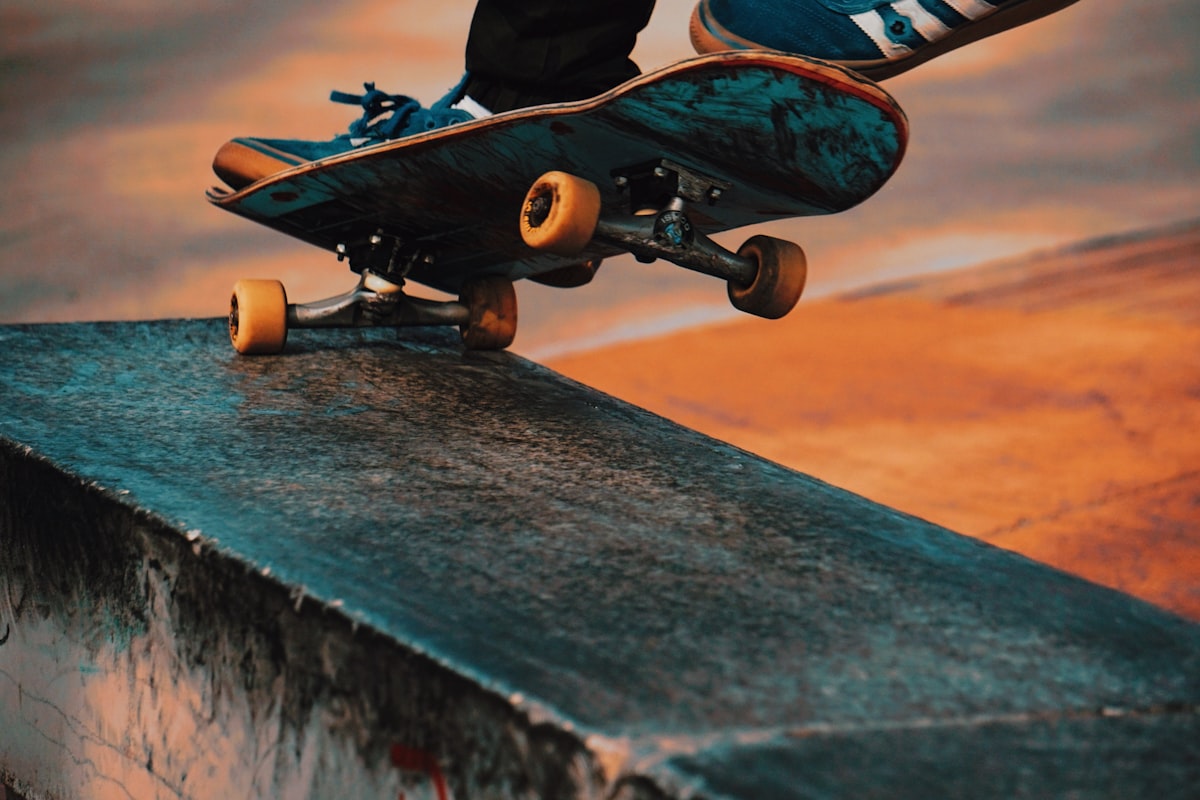
The two sports share a movement language: edges, compression, hips, and a line you commit to.
Skateboarding is the most surf-specific thing you can do on land.
Why Skateboarding Translates So Directly to Surfing
Most land-based training transfers to surfing through indirect pathways. Squats build the legs you use for bottom turns. Planks build the core you need for paddling. Swimming builds shoulder endurance. These are all useful, but they're analogous training — not replication training.
Skateboarding is different. When you pump a bowl, you're doing the same weight transfer pattern as pumping for speed on a wave. When you carve a surfskate, you're loading your rail exactly the way you would on a bottom turn. When you adjust your line approaching a bank, you're running the same visual scanning loop you use when you're trimming toward the pocket.
The neurological pathways are nearly identical. Your brain doesn't have to translate between "skate movement" and "surf movement" — the patterns are already close enough that training one strengthens the other. This is why surfers who skate during flat spells come back to the water sharper, not rustier.
There are limits. Skateboarding doesn't build paddle strength, doesn't train your breath hold, and doesn't teach you to read swell. But for the board-on-wave movements that define surf technique — stance, weight distribution, line choice, compression, rotation, and flow — nothing matches it.
Choosing the Right Board for Surf Training
Not every skateboard is useful for surfers. A standard popsicle-shaped street deck is built for flips and grinds — tight, stiff, and optimized for technical tricks. That's not what you want. You want a board that leans, carves, and pumps the way your surfboard does.
Here are the three board styles that actually translate to surfing, and when to use each.
Surfskates
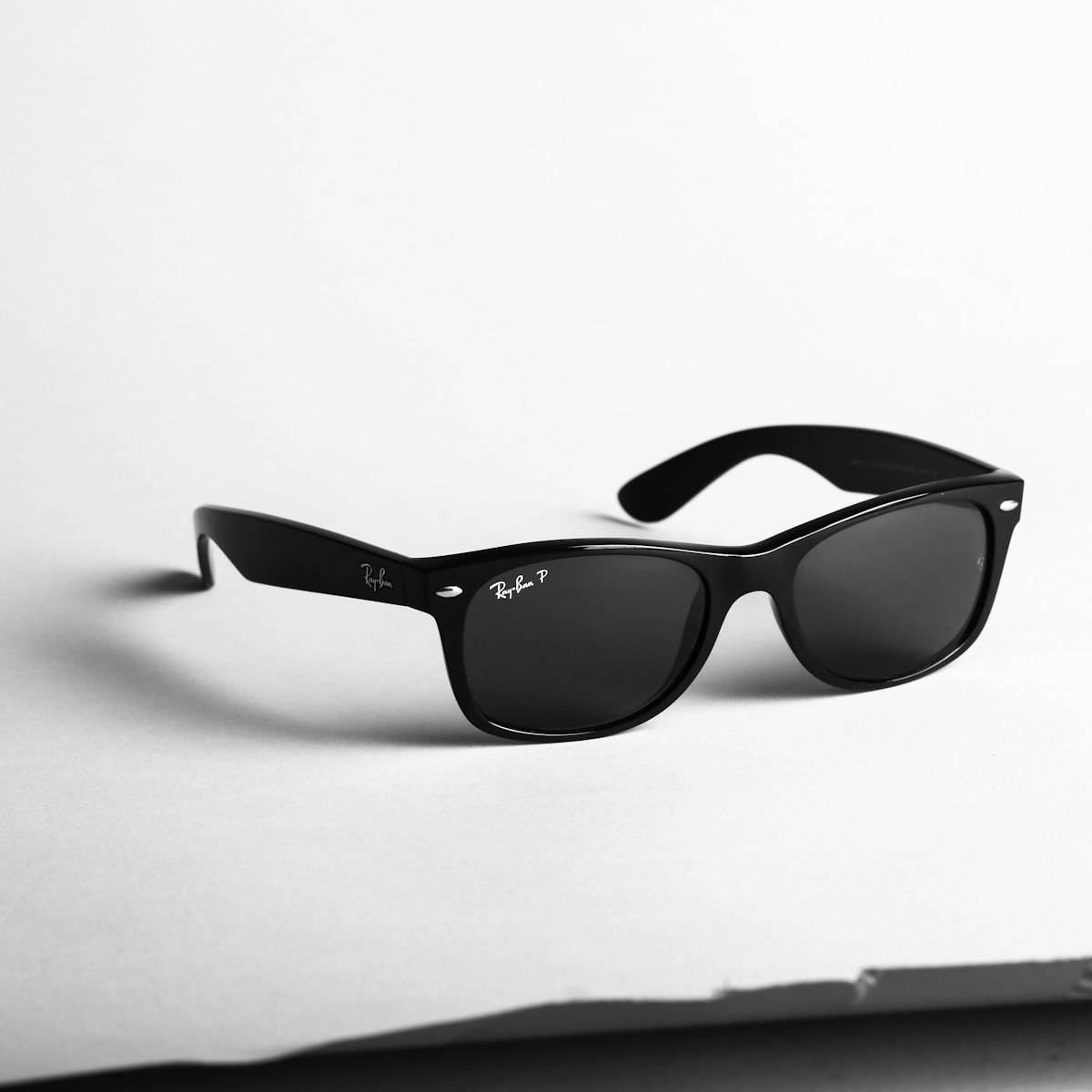
Surfskates have a special front truck that pivots much more aggressively than a standard skate truck. Brands like Carver, YOW, Smoothstar, and Slide all make variations, but the common thread is an articulated front truck that lets the board turn sharply with minimal input — the way a shortboard responds when you lean on a rail.
What they train: Surfskates are the closest land analog to shortboard surfing. They teach you to generate speed through pumping rather than pushing, to lean on your rails instead of muscling turns, and to flow through lines without braking. If you want to train cutbacks, bottom turns, and top turns, this is the tool.
What to watch out for: Surfskates are so sensitive that they can teach you to overcompensate with your upper body — throwing your arms and shoulders into turns that should be initiated from your hips. Stay compact. Keep your arms quiet. Let the board do what it wants to do.
Recommended for: Intermediate and advanced surfers who already have a basic surf stance and want to refine technique. Beginners can ride them but may find them twitchy.
Cruisers and Mini-Longboards
Cruisers sit between surfskates and longboards. Boards in the 28–34 inch range with soft wheels (78a–85a) and standard trucks — think Landyachtz Dinghy, Globe Bantam, or Loaded Coyote. They turn less aggressively than a surfskate but roll over rough pavement easily and are friendlier to beginners.
What they train: Cruisers are great for learning basic stance, weight distribution, and toe/heelside carving without the instability of a true surfskate. They're also the most practical option for actually getting around — you can commute on them, which means you're getting surf-adjacent reps every day without "training."
What to watch out for: A cruiser won't replicate the tight, pumping turns of a shortboard. Don't expect it to train radical maneuvers — treat it as a stance trainer and a flow tool.
Recommended for: Beginner to intermediate surfers, or anyone who wants daily mileage without the twitchiness of a surfskate.
Longboard Skateboards
Longboard skates (38–46 inches, with drop-through or drop-platform decks) are the closest analog to longboard surfing. They carve in long, drawn-out lines, reward weight shifts over arm-throwing, and teach patience in turns — all qualities that translate directly to longboarding in the water.
What they train: Trim, stance transitions, cross-stepping on longer decks, and flow over speed. Some longboards are stable enough that you can actually practice cross-stepping and hang-five-style weight shifts on land.
Recommended for: Longboarders, mid-length surfers, and anyone who wants to work on smooth style rather than sharp technique.
The bottom line on board choice: If you could only own one, a cruiser is the most versatile. If you want maximum surf-specific training, get a surfskate. If you ride longer surfboards in the water, ride longer boards on land.
What Skateboarding Can and Can't Teach You
Before getting into specific drills, it's worth being honest about the limits. Skateboarding transfers beautifully to some parts of surfing and barely at all to others.
Transfers well:
- Stance width, weight distribution, and body position
- Rail-to-rail weight transfer (toeside and heelside)
- Pumping for speed through compression and extension
- Bottom turn mechanics and the feeling of loading a rail
- Top turn mechanics — rotating off the lip and back down
- Cutback geometry — the pivot, the redirect, the reconnection
- Reading and committing to a line before you reach it
- Arm discipline (keeping them quiet and functional, not flailing)
Transfers poorly or not at all:
- Paddling technique and shoulder endurance
- Pop-up timing
- Wave selection and takeoff positioning
- Duck diving and turtle rolls
- Breath holding and hold-down composure
- Reading swell, wind, and tide
The takeaway: skateboarding is a technique amplifier, not a complete surf training system. Use it for movement skills and pair it with paddling, breath training, and ocean time for everything else. If you want a structured land workout that covers the paddle and core side of things, our surf fitness workout for no-wave days pairs well with the skate work in this article.
Five Drills That Build Specific Surf Skills
Working on carver skateboard? Partner with Neptune on iPhone and Apple Watch.
Get on iOSGeneric "just go skate" is fine, but deliberate practice works faster. Here are five drills that target specific surf movements. Each takes 10–20 minutes and can be done in a parking lot, on a quiet street, or at a skatepark.
Drill 1: The Parking Lot Pump
What it trains: Generating speed without pushing — the land version of generating speed in the wave face.
How to do it: Find a flat, empty parking lot. Starting from a stop, push off once to get moving, then put both feet on the board and try to maintain or build speed using only rail-to-rail pumping. Sink down into a compressed stance as you shift weight to your toeside, then extend as you shift to your heelside. Repeat in a rhythm. The goal is to feel like you're drawing S-curves through the lot and gaining speed each time.
Common mistakes: Pumping with your shoulders instead of your hips. Standing too upright. Shifting weight between your front and back foot rather than across your rails.
Reps: Work up to three minutes of continuous pumping without pushing. If you can do this on a surfskate, your rail awareness is probably already pretty good.
Drill 2: The Toeside/Heelside Carve Set
What it trains: Rail engagement on both sides of the board. Most surfers have a dominant rail — the frontside carve feels natural and the backside feels stiff. Skating lets you work the weaker side without wasting waves.
How to do it: Find a gentle sloping street or paved hill. Roll down at a slow, controlled speed. Carve aggressively toeside, then heelside, then toeside, linking long turns edge-to-edge. Focus on the side that feels awkward. For most regular-footed surfers, that's the heelside carve (equivalent to a backside turn).
Common mistakes: Leaning from the shoulders. Looking down at the board instead of where you want to go. Rushing the transition between rails.
Reps: Five to ten runs down the hill, focusing on the weaker side for at least half of them.
Drill 3: The Bowl Line
What it trains: Reading and committing to a line, flowing through turns, and the feeling of compressing into a pocket — all directly applicable to surfing transitions and wave faces.
How to do it: Find a mellow concrete bowl at your local skatepark. Start by just rolling through and carving the mellower walls. As you get comfortable, pick a line before you drop in — commit to hitting specific points in the bowl in sequence. Notice how your eyes move ahead of your board, exactly the way they should when you're reading a wave face.
Common mistakes: Going too fast too soon. Looking at the wall you're on instead of the next one. Stiff legs — bowls reward compression, punish stiffness.
Reps: 15–20 minutes of consistent bowl riding. This is also the most similar feeling to surfing pointbreak walls and open faces.
Note: Wear a helmet. Bowl skating has real consequences and a helmet is non-negotiable once you're actually dropping in.
Drill 4: Line Choice on a Curb
What it trains: Reading and committing to a surfable line. Exactly what you do when you pick a wave and decide where to go on it.
How to do it: Pick a straight section of road or walkway with a curb on one side. Before you start rolling, decide on a pattern — for example, four toeside carves and four heelside carves, alternating. Now roll the section and execute the pattern exactly as planned. No improvising.
Why it works: Surfers often fail not because they lack the physical skill but because they don't commit to a line before they need it. They see the wave, wait too long, and then react instead of riding. This drill forces you to plan and execute, which is a mental skill more than a physical one.
Reps: Five passes of the same section, each with a pre-planned sequence of turns.
Drill 5: The Long Carve
What it trains: Patience in turns, long arcs, and smooth weight transfer — the fundamentals of longboard surfing and classic style.
How to do it: On a cruiser or longboard skate, find a long straight path. Draw the biggest, slowest carves you can — one turn every 15–20 feet, flowing from rail to rail. Keep your arms low and still. Let the turn develop slowly rather than forcing it.
Why it matters: Most intermediate surfers overturn — they pivot sharply when a long arc would carry more speed and look better. Training long, patient carves on land retrains that instinct.
Reps: Two or three minutes of continuous long-carve flow, arms quiet.
Translating Skate Time Into Surf Time
Drills are valuable, but some of the biggest surf improvements come from unstructured skating — just cruising around with a surf mindset. A few principles that make every session count more.
Ride in your surf stance. If you're a natural surfer, skate natural. If you're goofy, skate goofy. Don't switch stances because a friend told you to. Your nervous system is wiring stance-specific patterns every time you skate — those reps should reinforce your surf stance, not confuse it.
Keep your arms quiet. Watch footage of your favorite surfer. Their arms don't flail. They make small, functional adjustments while the hips, knees, and ankles do the real work. Skateboarding is a chance to practice arm discipline. If you catch yourself throwing your arms into every turn, slow down until you can turn cleanly from the lower body.
Look where you're going, not where you are. In both surfing and skating, your eyes lead your body. If you want a smooth, flowing line, your eyes should already be on the next target before your feet finish the current turn. This is a trainable habit and skating is a low-stakes environment to build it.
Compress, don't just bend. Compression is active — dropping into a squat with your weight centered and your core engaged. Bending is passive — folding forward at the waist. Surfers bend when they should compress. Skating a bowl or a carver teaches the difference because passive bending will put you on your butt within seconds.
End every session on flow. Even if you're doing drills, finish with 10 minutes of easy cruising where you're not trying to accomplish anything. This locks in the feeling of the session and sends you home associating the board with relaxation rather than effort.
Building a Skate Routine Around Your Surfing
Here's how I'd structure skateboarding in a typical week of training, depending on how often you surf.

If you surf 4+ times a week:
- 1–2 short skate sessions (20 min each) for maintenance
- Focus on pumping and rail drills to keep your stance sharp
If you surf 2–3 times a week:
- 2–3 skate sessions (30 min each)
- Mix structured drills with free flow time
- Add bowl sessions if you have access
If you're surfing less than 2 times a week (flat spell, travel, injury):
- 3–4 skate sessions per week
- Longer sessions, 45–60 min
- Include at least one bowl or transition session per week
- Pair with dry-land paddle training and core work to cover what skating doesn't
The biggest mistake is binge-skating for three hours once a week. Your body and your movement patterns respond better to shorter, more frequent sessions. Four 30-minute skates will improve your surfing more than one two-hour park session.
Safety and the Cost of Land Practice
One reality check: skateboarding injures more surfers per hour than surfing does. Concrete doesn't absorb falls the way water does. A minor wipeout at a skatepark can end your surf season — a broken wrist from a bowl will keep you out of the water for months.
Three non-negotiable rules:
Wear a helmet in bowls, on hills, and any time you're riding faster than jogging pace. Helmets for transition skating are standard for a reason.
Wear wrist guards if you're new to transition. Fractured radius and broken wrists are the most common skateboarding injuries, and they happen when you instinctively throw out a hand to catch a fall. Guards turn a potentially career-ending injury into a scraped palm.
Don't skate tired or distracted. Most bad falls happen at the end of sessions when your legs are cooked but you want "one more run." If you're surfing primarily and skating to support it, stop skating before your form degrades — otherwise you're risking the thing you're trying to support.
Experienced surfers often approach skateboarding with a dismissive "I've got this" attitude because the movement feels familiar. Respect the surface. Concrete doesn't care how well you surf.
The Bottom Line
Skateboarding is the most efficient form of surf cross-training because it rehearses the actual movements of surfing rather than just conditioning the muscles that support them. A surfer who skates consistently will feel sharper, more coordinated, and more confident on a wave than a surfer who only trains in the gym.
The transfer isn't magic. It's repetition of the same patterns — stance, weight shift, rail engagement, line choice — over and over, on land, until they become the default. When you paddle back out to the lineup, the board under your feet feels familiar because you've been riding a version of it all week.
Surf when you can, paddle when you can't, and skate whenever neither of those is an option. Neptune tracks your sessions and can factor cross-training into your coaching recommendations — log your skate sessions alongside your surfs and you'll start to see how consistent land training translates into measurable improvement in the water.
Read it. Then take it to the water.