Mid-Length Surfboards: How to Choose One

Neptune
April 13, 2026

The Mid-Length Revolution
Boards that are not quite longboards and not quite shortboards are everywhere now.
A mid-length — generally 6'6" to 8'0" — catches nearly everything and still lets you turn.
If you've been curious about mid-lengths, or if you've been riding one but want to understand it better, this guide covers everything — what makes a mid-length different, how to choose the right one for your surfing, the key design variables that affect performance, and how to get the most out of this incredibly versatile craft.
What Exactly Is a Mid-Length?
The term "mid-length" is deliberately broad. It covers a spectrum of shapes that sit between traditional shortboards and longboards, but the category is more about design philosophy than a specific set of dimensions.
At the shorter end (6'6" to 7'2"), you'll find boards that surf more like stretched-out shortboards — responsive, quick rail-to-rail, and capable of real vertical surfing. At the longer end (7'6" to 8'0"), you'll find boards that paddle closer to longboards but turn far better than anything over nine feet.
Common Mid-Length Shapes
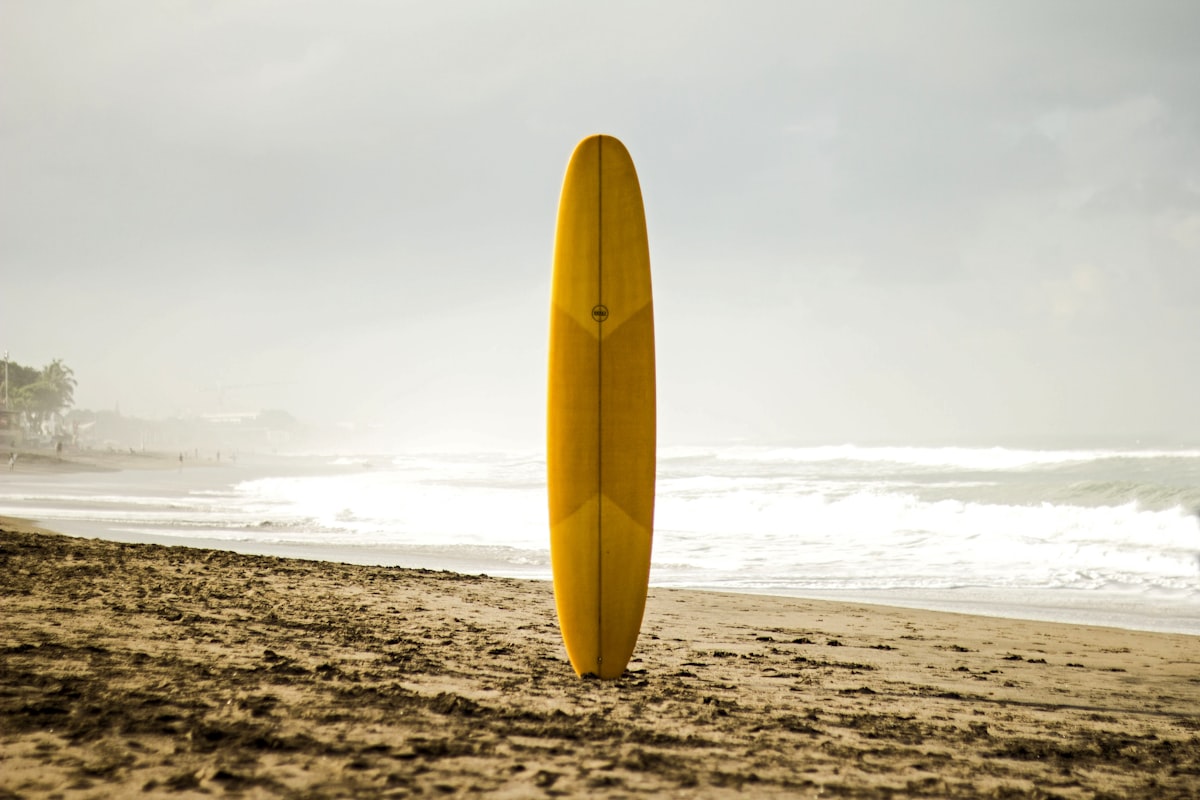
The Egg — A rounded outline with a wide nose, full rails, and a pulled-in tail. Eggs are the quintessential mid-length. They paddle incredibly well, glide through flat sections, and turn off the tail with surprising responsiveness. If you're buying your first mid-length, an egg is almost always the right call.
The Mini Mal (Funboard) — A scaled-down longboard shape, usually with a pointed or slightly rounded nose and a squash tail. Mini mals retain more longboard DNA — they're stable, forgiving, and great for nose-riding in smaller surf. They're also excellent for heavier surfers or those coming from longboards who want to size down gradually.
The Displacement Hull — A more specialized shape with a rolled bottom contour (convex rather than flat or concave) and a narrow, downturned nose. Hull mid-lengths have a distinctive gliding sensation — they trim through the water rather than planing across the surface. They're not for everyone, but devoted hull riders describe the feeling as unlike anything else in surfing.
The Performance Mid-Length — A more modern shape with shortboard-influenced features: sharper rails, more rocker, concave bottoms, and sometimes even a step-up style outline. These are designed for surfers who want shortboard-level performance with better paddle power and wave count.
Why Mid-Lengths Work So Well
To understand why mid-lengths have become so popular, you need to understand the fundamental tradeoffs in surfboard design.
The Paddle Power Advantage
Wave-catching ability is primarily a function of waterline length and planing area. Longer, wider boards sit higher in the water, generate more speed when paddling, and engage the wave's energy earlier. This is why longboards catch waves so easily — they're simply moving faster when the wave arrives.
A mid-length captures most of this advantage. A 7'6" egg with enough volume will catch waves almost as easily as a 9'0" longboard, and dramatically easier than a 6'0" shortboard. For most surfers, this translates directly into more waves per session — and more waves means more practice, more fun, and faster improvement.
The Turning Tradeoff
The reason surfers ride shorter boards isn't paddle power — it's turning. Shorter boards rotate faster, engage the rail more easily, and allow the surfer to direct the board vertically on the wave face. A longboard, for all its paddle power, is fundamentally limited in how quickly and sharply it can change direction.
Mid-lengths split this difference intelligently. A well-shaped mid-length won't turn like a 5'10" high-performance shortboard, but it will turn far better than most surfers realize — especially once you learn to surf it properly. More on technique later.
The Volume Sweet Spot
Volume (measured in liters) determines how much flotation a board provides. Too much volume and the board feels corky and unresponsive. Too little and you struggle to paddle, catch waves, and generate speed.
Mid-lengths sit in a volume range that works for the broadest range of conditions. Where a shortboard might have 25-32 liters and a longboard 65-80 liters, a mid-length typically falls between 40-55 liters. This is enough to paddle easily and catch waves early, but not so much that the board fights you when you try to put it on rail.
How to Choose the Right Mid-Length
Choosing a mid-length comes down to four variables: your size, your skill level, the waves you surf most often, and what you want to get out of the board.
Length
6'6" to 7'0" — Best for lighter surfers (under 160 lbs), experienced surfers who want a step-up from a shortboard, or anyone surfing primarily in chest-high to overhead waves. At this length, you get noticeably more paddle power than a shortboard while retaining a lot of shortboard feel.
7'0" to 7'6" — The sweet spot for most surfers. This range provides excellent paddle power in everything from knee-high to overhead surf, enough stability for intermediate surfers to feel confident, and enough maneuverability for advanced surfers to push their turns.
7'6" to 8'0" — Best for larger surfers (over 200 lbs), beginners transitioning off a foam board, or anyone who prioritizes wave count and glide above all else. These boards shine in small to medium surf and are forgiving enough for surfers still developing their fundamentals.
Width
Mid-lengths typically range from 20.5" to 22.5" wide.
- Wider (21.5"+) provides more stability and paddle power. Better for beginners, heavier surfers, and small wave conditions.
- Narrower (under 21") allows for quicker rail-to-rail transitions and better performance in steeper, more powerful waves. Better for experienced surfers.
Thickness
Most mid-lengths fall between 2.5" and 3" thick. Thicker boards float higher and paddle easier but can feel sluggish when trying to sink the rail into a turn. Thinner boards are more responsive but sacrifice some of that easy paddle power.
A good rule of thumb: if you're primarily surfing waist-to-chest-high waves and want maximum wave count, go thicker. If you're surfing head-high-plus and want performance, go thinner.
Tail Shape
The tail has an outsized influence on how a mid-length rides.
Working on funboard? Partner with Neptune on iPhone and Apple Watch.
Get on iOS- Round pin — Smooth, drawn-out turns. Great in powerful waves and the most classic mid-length tail choice. Holds well in steeper faces.
- Squash — More release in turns, punchier off the top. Works well in mushier waves where you need to generate speed and create your own turning opportunities.
- Swallow — Provides speed and hold simultaneously. A great choice for surfers coming from shortboards who want familiar turning characteristics.
- Diamond — A hybrid between round pin and squash. Versatile and forgiving. Common on eggs.
Fin Setup: Single, Twin, 2+1, or Thruster
Fin configuration changes the character of a mid-length more dramatically than almost any other variable. The same board can feel like a completely different craft depending on what fins you run.
Single Fin
The classic choice for mid-lengths, especially eggs and hulls. A single fin provides a smooth, flowing ride with long, drawn-out turns. It encourages you to surf with style — trimming, carving, and reading the wave rather than hacking at it. The tradeoff is less hold in steep, powerful waves and slower transition from rail to rail.
For your single fin, start with a fin that's roughly 1" per foot of board length (so a 7.5" fin for a 7'6" board) and adjust from there. Bigger fins provide more hold and drive; smaller fins loosen the board up.
2+1 (Single + Side Bites)
A single fin box with two smaller side fins. This is the most versatile mid-length setup because you can run it as a single fin (remove the side bites), as a 2+1 (all three), or experiment with different side bite sizes to tune the board's feel.
The side bites add hold and prevent the tail from sliding out in steeper waves. They also make the board feel more responsive rail-to-rail. If you're only going to own one mid-length, a 2+1 setup gives you the most options.
Twin Fin
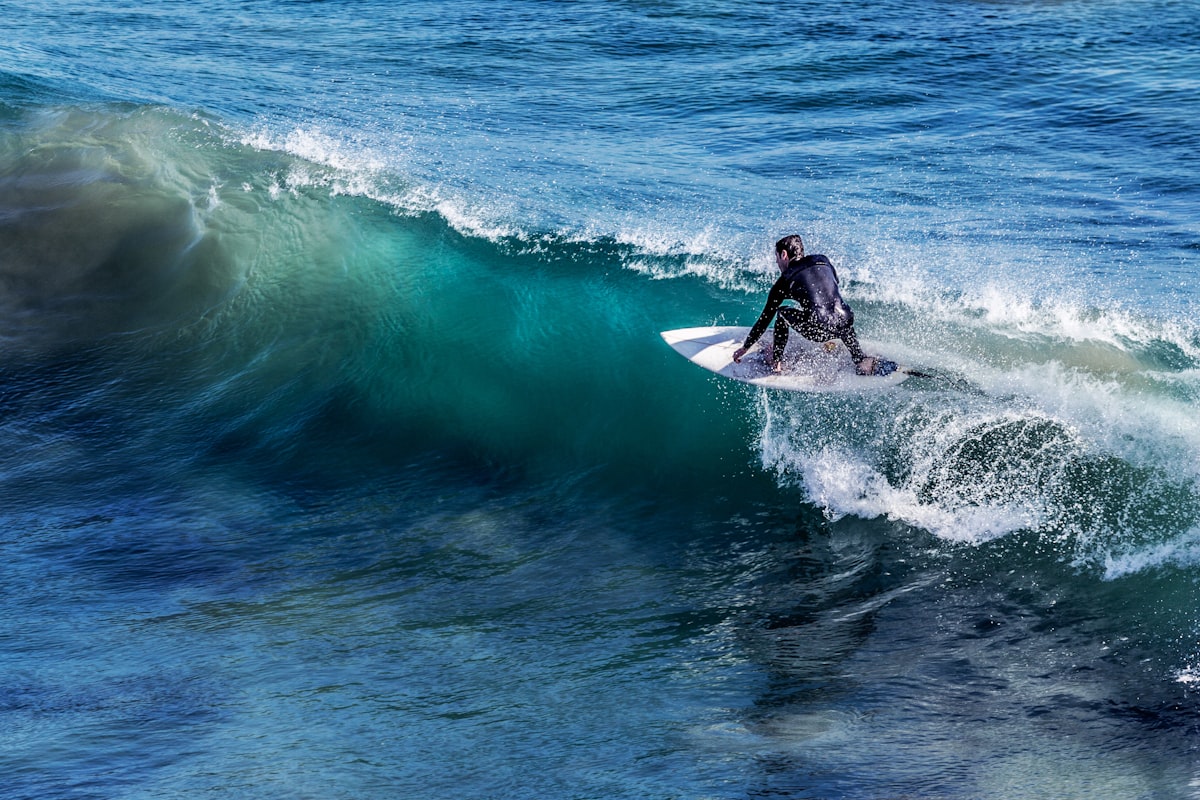
Twin fins on a mid-length create a fast, skatey feel with a pronounced looseness through turns. This setup is less common on traditional mid-lengths but has become popular on more modern shapes, especially those with swallow tails. Twin-fin mid-lengths are incredibly fun in waist-to-shoulder-high waves — they generate speed effortlessly and allow for fluid, sweeping turns.
Thruster (Tri-Fin)
Running a thruster setup on a mid-length gives it the most shortboard-like feel. You get excellent hold, vertical turning capability, and predictable behavior in a wide range of conditions. This is a good choice for surfers transitioning from shortboards who want familiar fin dynamics with more paddle power.
Technique: How to Surf a Mid-Length Well
One of the most common mistakes surfers make when they first ride a mid-length is trying to surf it like a shortboard or a longboard. A mid-length has its own technique, and learning it is what separates surfers who love their mid-length from those who find it frustrating.
Foot Placement
On a shortboard, your back foot lives on or near the tail pad. On a longboard, you walk the board. On a mid-length, your stance is more dynamic than a shortboard but less mobile than a longboard.
For trimming and generating speed, keep your weight centered — both feet roughly around the middle third of the board. This keeps the board planing and uses the full rail line for speed.
For turning, step your back foot toward the tail — how far back depends on how sharp you want the turn. The further back you step, the more the board pivots off the tail. This is the key adjustment: you're not locked in a fixed stance. You're constantly shifting your weight forward and back to match what the wave is doing.
Generating Speed
Mid-lengths generate speed differently than shortboards. Where a shortboard pumps through quick, sharp rail-to-rail weight shifts, a mid-length responds better to smooth, flowing weight transfers. Think of it as drawing bigger, rounder lines on the wave face rather than rapid zigzags.
Use the board's glide to your advantage. On a mid-length, you can often generate more speed by trimming high on the wave face and angling down than by pumping aggressively. Let the board do the work — it has far more momentum than a shortboard and will carry speed through sections where a shorter board would bog down.
Turning
This is where most surfers need to recalibrate. A mid-length turns from the tail, but you initiate turns with your entire body — not just your back foot. Here's the sequence:
- Look where you want to go (head and shoulders turn first)
- Compress by bending your knees to load energy into the rail
- Extend and push through your back foot to drive the turn
- Follow through with your hips and shoulders
The key difference from shortboard turning: you need to commit earlier and be more patient. The turn won't snap around instantly — it builds progressively as the rail engages. Fight the urge to force it. When you time it right, a mid-length bottom turn or cutback has a powerful, drawn-out beauty that's deeply satisfying.
The Best Conditions for a Mid-Length
Mid-lengths excel in the waves that make up 80% of most surfers' sessions: waist-high to head-high, with moderate power. This is the sweet spot where you get enough wave face to turn but the paddle advantage means you're catching everything.
Small Surf (Knee to Waist High)
This is where mid-lengths truly shine compared to shortboards. On days when shortboarders are struggling to catch waves and generate speed, a mid-length lets you surf with flow and purpose. The extra volume and waterline length mean you're catching waves earlier, carrying more speed, and actually surfing rather than fighting for scraps.
Medium Surf (Waist to Head High)
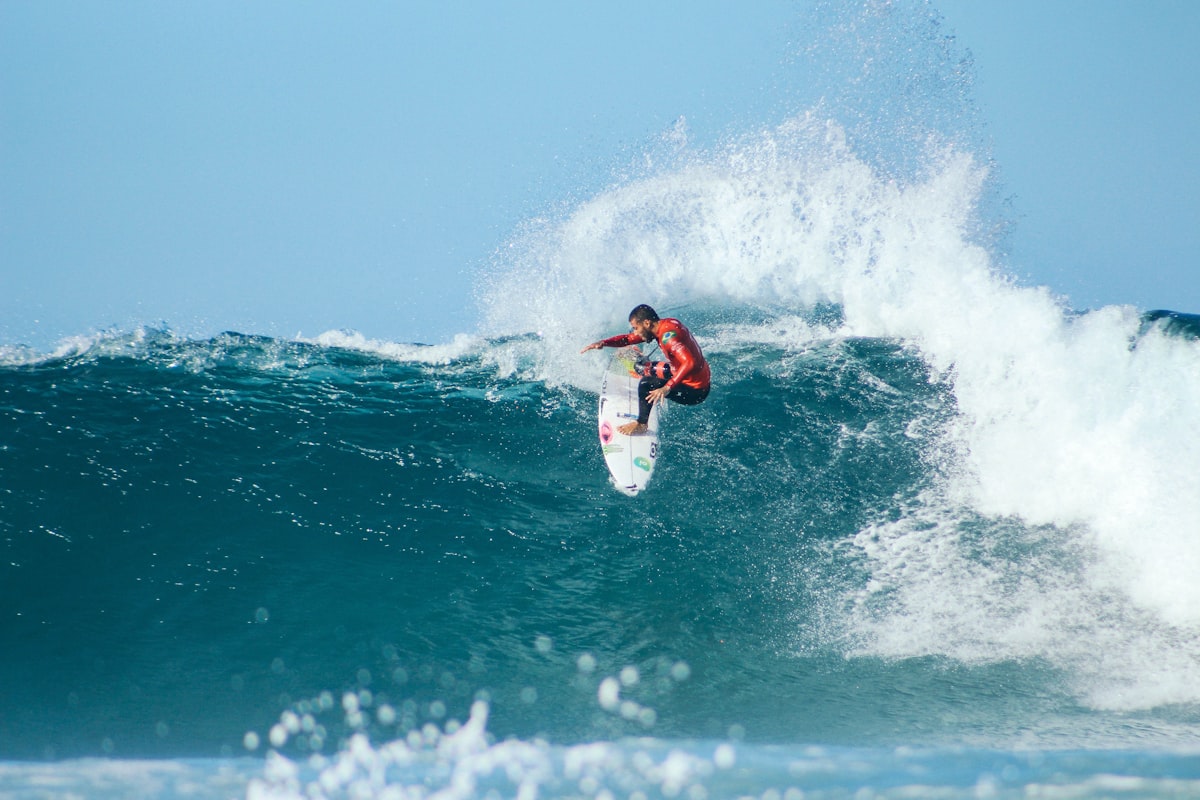
The ideal range. You have enough wave face for real turns, the board has enough drive to handle steeper sections, and you still enjoy the paddle advantage. This is where a well-shaped mid-length feels like the best board in the water.
Overhead and Above
Most mid-lengths start to feel uncomfortable once waves get significantly overhead. The extra volume that helps in smaller surf can work against you — the board may feel too buoyant to duck dive effectively, and the wider outline can get pushed around by powerful whitewater. That said, performance-oriented mid-lengths with narrower outlines and more rocker can handle overhead surf well.
Building a Mid-Length Into Your Quiver
If you currently ride a shortboard, adding a mid-length transforms your surfing life. Suddenly those "not worth it" days become fun sessions. Your wave count doubles. And you develop a different relationship with turning and flow that actually improves your shortboard surfing.
If you currently ride a longboard, a mid-length lets you access steeper, faster waves that a longboard would pearl or struggle to turn on. You keep most of the paddle power you're used to but gain a huge upgrade in maneuverability.
For many surfers, the mid-length becomes their go-to board — the one they reach for 60-70% of the time. The shortboard comes out for overhead days at the point break, and the longboard for tiny summer evenings, but the mid-length handles everything in between.
The One-Board Quiver
If you could only own one surfboard — maybe you're traveling, maybe you're simplifying — a mid-length is the strongest all-around choice. Specifically, a 7'0" to 7'6" egg in a 2+1 fin setup, with dimensions appropriate for your weight. This board will handle 90% of the conditions you'll ever encounter and let you surf them well.
Common Mistakes When Buying a Mid-Length
Going Too Short
The number one mistake. Surfers — especially those coming from shortboards — instinctively reach for the shortest mid-length they think they can ride. But the whole point of a mid-length is paddle power and wave count. A 6'6" for a 180 lb surfer isn't really a mid-length — it's a long shortboard. Don't be afraid of length. A 7'4" that catches everything will make you a better surfer than a 6'8" that paddles marginally better than your shortboard.
Ignoring Volume
Two boards can be the same length but have dramatically different volumes depending on width, thickness, and rail profile. Always check the liter count and make sure it's appropriate for your weight. A good starting point for a mid-length is 65-80% of your body weight in kilograms, expressed in liters. So a 80 kg (176 lb) surfer would look for a mid-length with roughly 52-64 liters.
Choosing the Wrong Fin Setup
If you're new to mid-lengths, start with a 2+1 or thruster. A single fin is beautiful but less forgiving — save it for your second mid-length once you understand how these boards ride.
Surfing It Like a Shortboard
This bears repeating: mid-lengths reward smooth, flowing surfing. If you're trying to do sharp snaps and airs, you'll be frustrated. Slow down, draw bigger lines, and let the board's natural glide and speed work for you. The best mid-length surfers look effortless because they're working with the board rather than against it.
The Bottom Line
Mid-length surfboards aren't a compromise — they're a different approach to wave riding that happens to work exceptionally well for the conditions most of us surf most of the time. Whether you're an experienced surfer looking to expand your quiver, an intermediate surfer searching for a board that makes every session count, or a beginner ready to step off the foam top, there's a mid-length out there that will change how you think about surfing.
The best board is the one that gets you the most waves and the most joy. For a lot of surfers, that board is somewhere between 6'6" and 8'0", a little wider than you'd expect, and more fun than you'd imagine.
Read it. Then take it to the water.