How to Handle Wipeouts: A Surfer's Guide to Falling Safely

Neptune
April 16, 2026
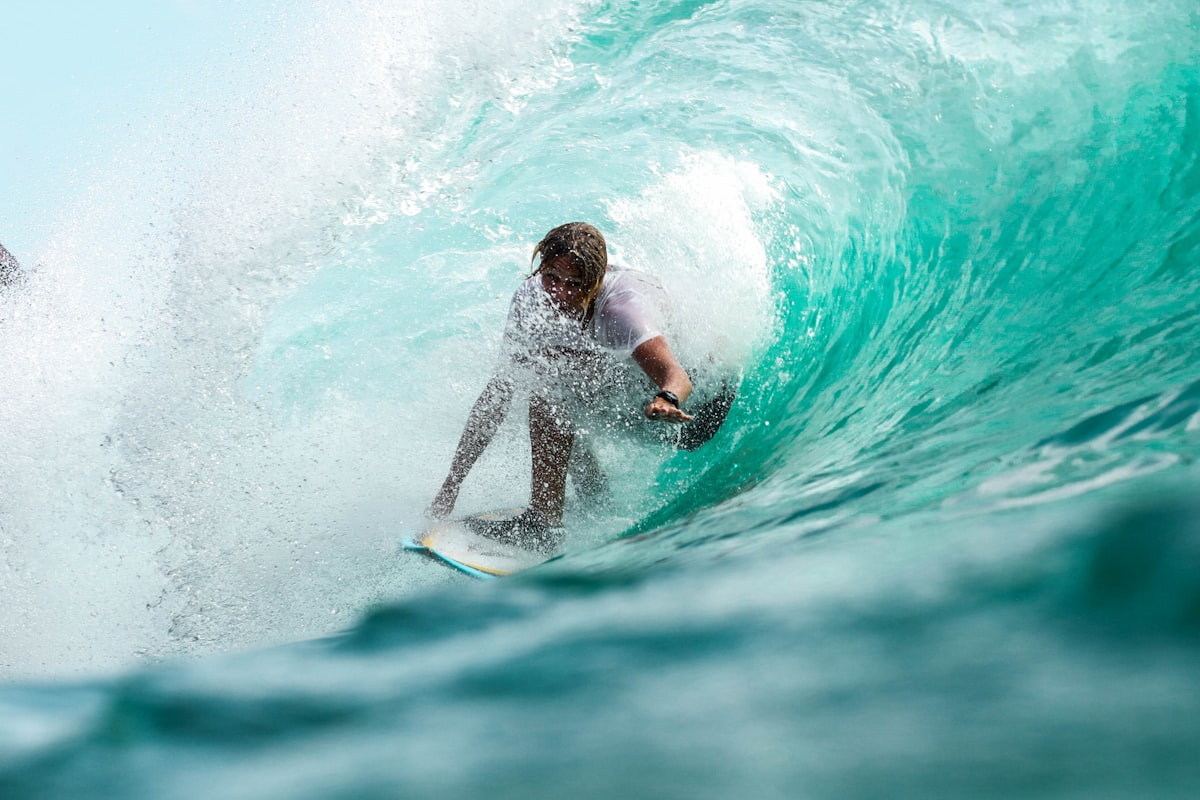
There's a comforting myth in surfing that good surfers don't fall. Watch a clip reel of any pro and you'll see clean lines, perfect turns, and airs landed on the flats. What you don't see is the ninety percent of their session that ended on the wrong side of the lip — because that footage gets cut.
The truth is every surfer, at every level, wipes out. Often. Kelly Slater wipes out. John John Florence wipes out. Your local hero with the photo-perfect backhand wipes out. The only variable is what happens in the two to ten seconds after they leave their board — and whether they emerge calm and ready to go again, or panicked and rattled for the rest of the session.
Most surfers never get taught this part. You learn to pop up, generate speed, turn, maybe duck dive. But falling? You're left to figure that out on your own, usually the hard way. This guide fixes that. We'll cover fall technique, what to do underwater, how to manage hold-downs, and how to build the mental scaffolding that keeps a wipeout from stealing your session.
Why Wipeouts Matter More Than You Think
Wipeouts aren't a minor side effect of surfing — they're a core part of the sport. In a typical 90-minute session, an intermediate surfer might catch eight to twelve waves and fall on at least half of them. Advanced surfers push harder on every wave, which means they fall even more.
If you're going to spend a significant percentage of your surfing life underwater, the case for learning to wipe out well is overwhelming. The benefits compound:
- Less fatigue. A bad wipeout wastes energy through panic flailing and tense muscle contraction. A controlled wipeout preserves oxygen and keeps you relaxed.
- Fewer injuries. Most surfboard-related injuries — cuts from fins, concussions from the deck, dislocated shoulders — happen because surfer and board collided during a fall.
- Better progression. You can't practice late takeoffs if the prospect of eating it terrifies you. Learning to wipe out safely unlocks skill development.
- Preserved confidence. One traumatic wipeout can reset your mental game for weeks. Processing heavy falls is what separates surfers who keep progressing from those who plateau.
Treat the wipeout as a skill. It rewards practice.
Fall Technique: How to Leave Your Board
The first decision in any wipeout is how you separate from your board. Get this wrong and you increase the chance of the board hitting you, of impaling yourself on fins, or of landing in a position that makes recovery harder.
Fall Flat, Not Deep
The default instinct when you lose a wave is to leap forward or dive headfirst to "get out of the way." This is almost always wrong. In most surf, the water underneath the breaking wave is shallow — often shallower than you think, especially over reef, at low tide, or on a shallow sandbar.
Instead, fall flat. Aim to land on your back or side with your body spread wide across the surface. A flat landing distributes impact, keeps you in the turbulent top layer of water where the reef and rocks can't reach you, and gives the wave something large to push around rather than a compact missile it can drive into the bottom.
Visualize it like this: when you sense you're about to fall, imagine you're trying to land as if on a soft bed. Arms out. Legs spread. Maximum surface area. Splat.
Protect Your Head on the Way Out
As you fall, bring your arms up toward your head. Not all the way — you don't want to crash down on your own wrists — but in a loose cradle position near your face and ears. Your board is still attached to your leash, which means it's somewhere within about nine feet of you, and it will move unpredictably in turbulence.
Most surfers get hit by their own board, not someone else's. A relaxed arm shield around your head is cheap insurance that becomes automatic once you practice it a few dozen times.
Know Where Your Board Is
The split-second before you submerge, note where your board is. Is it above you? Below? To your right? This information is only valuable if you preserve it through the tumble — which is why staying calm matters. Panic erases situational awareness, and suddenly you're swimming blind toward a hard chunk of foam and resin.
What to Do Once You're Underwater
Congratulations, you're now in the washing machine. This is where most surfers panic — and where the most important lessons of wipeout technique actually live.
Go Limp and Let the Wave Finish
Your body's instinct under violent turbulence is to fight. Kick for the surface. Claw toward the light. Tense every muscle. Every single one of those reactions burns oxygen you'll need in a few seconds.
The correct response is counterintuitive: relax. Go loose. Let the wave do what it's going to do with you. A breaking wave creates a chaotic rotation of water — resist it and you just extend how long you get tumbled. Surrender to it and the energy dissipates faster, which means you get released faster.
This takes practice to accept. Your amygdala is screaming that you're drowning. Your rational brain has to override it with the knowledge that the wave will release you, that your wetsuit and lungs are making you buoyant, and that the fastest way out is through.
Protect Yourself from the Board and the Bottom
While you're relaxing, keep one hand near your head. Your leash is a literal tether between you and a hard object in the same churning water. In heavy turbulence, the board can whip around at head-cracking speed.
If you're surfing anywhere shallow — reef, rock, hard-packed sand — also consider protecting your spine. A fetal tuck with arms shielding your head and knees loosely drawn up is the "brace position" for heavy wipeouts. You're small, you're low-profile, and your vital parts are covered.
Open Your Eyes if You Can
This feels wrong but it's valuable. If the water is clear enough, open your eyes briefly to orient yourself. Spotting the lighter color above you (surface light) versus darker below tells you which way is up — crucial if the tumble has disoriented you. In murky water, exhale a small puff and feel which direction the bubbles travel. Up is that way.
Managing the Hold-Down
In average surf, most wipeouts have you under for two to four seconds. It feels like an eternity the first time; after a few hundred reps, it feels like nothing.
As surf gets bigger, hold-downs get longer. In head-high surf, expect three to six seconds. In overhead, five to ten. In truly big waves — the territory that most recreational surfers never enter — two-wave hold-downs of fifteen to thirty seconds are possible and are the primary danger of the sport.
Working on ocean safety? Get personalized tips from Neptune's AI coach.
Try FreeThe Breath Economy
Here's the critical mental shift: your body has far more oxygen than the panic response suggests. The urge to breathe is triggered by CO2 buildup, not oxygen shortage. You can resist that urge for much longer than it feels like, especially if you're relaxed.
Practice this on land. Take a normal breath (not a huge one — huge breaths trigger faster CO2 discomfort), then time how long you can calmly hold it before the first strong urge. Most untrained people get 30-40 seconds. With two weeks of daily practice, you can be at 60-90 seconds easily. That's more than enough for any recreational-size wipeout, with margin.
Key techniques:
- Don't take a giant gulp before you go under. Counterintuitively, a relaxed half-breath lasts longer than a panicked chest-full.
- Don't exhale immediately. Surfers sometimes blow bubbles out of anxiety. Every bubble you exhale is oxygen you lose.
- Relaxed face, relaxed shoulders. Tension anywhere in the body increases oxygen consumption. Your face alone has dozens of small muscles that all burn O2 when clenched.
When to Swim Up
Wait until you feel the turbulence slow. The wave has a distinct rhythm — violent explosion, tumbling, then a calmer release phase as the whitewater dissipates. Don't swim until you're in that third phase. Swimming through the violent phase just puts you at the mercy of random forces.
Once it calms, swim up along your leash. Pull gently on the leash to find the board, then angle up away from it. Your board is a flag telling you where the surface is.
If You Need a Second Breath Before You Get Up
Modern wetsuits and lungs make you unusually buoyant. If you find yourself running out of air and you're not yet at the surface, stay calm. Exhale a little as you ascend — this allows the remaining air in your lungs to expand without damaging you as pressure drops, and it extends the functional length of your breath hold slightly.
If the second wave of a set is bearing down and you're still recovering, take one quick breath and duck again. Trying to punch through a wave while oxygen-debt is worse than surrendering to one more tumble.

Surfacing and Recovering
You're back on top. You're not done.
First: Find Your Board Before You Catch Your Breath
This sounds backwards, but it isn't. The board is attached to your leg by a cord that could snap. It's floating nearby in water where a second wave may be about to break. You want to have your hands on it before your next exhale, for two reasons: it's flotation if another wave hits, and you don't want it yanked out of leash range if the cord fails.
Glance down the leash, pull, and get a hand on the rail. Now you can breathe.
Breathe Before You Panic
The single strongest post-wipeout instinct is to gasp. Resist this. A slow, deep inhale refills your lungs more effectively than a series of shallow panting breaths, and it signals to your nervous system that the threat is over.
Take two or three deliberate breaths. Let your heart rate normalize. Check yourself for injuries — any sharp pain? Any blood in the water? Any joints that don't feel right?
Evaluate Before Paddling Back Out
This is the moment where a lot of surfers make a mistake. After a heavy wipeout, adrenaline masks fatigue. You think you're fine. You paddle straight back to the peak, catch another wave, fall again, and now you're twice as tired and only half as sharp.
Take thirty seconds to evaluate. Are you actually okay? Is your board okay — no snapped fins, no cracked nose? Are you in a safe position relative to the next set? If you're gassed or rattled, paddle to the channel, sit for a few minutes, reset, and return when you're ready. The wave will come back. Your concentration won't if you don't rebuild it.
The Specific Cases That Require Different Technique
Not all wipeouts are the same. A few situations call for specific responses.
Shallow Reef
Over shallow reef (Indonesia, Hawaii's North Shore, Fiji), the priority shifts toward not hitting the bottom. Go flat, starfish your body on the surface, and use the wetsuit or rash guard as a shield. Many surfers in reef spots wear helmets for exactly this reason. If you feel yourself being driven toward the reef, try to present your feet or your padded wetsuit chest rather than your hands or head.
Big Barrels Closing Out
When you get sucked over the falls on a closing-out barrel, you're going to be driven deep and tumbled hard. Accept this. Fall as flat as you can, brace, and commit to being under for a longer count than usual. Fighting the wave in this scenario does literally nothing except tire you out.
Two-Wave Hold-Downs
If you surface just as the next wave breaks on you, you have maybe a half-second to grab a breath and go under again. Prioritize the breath over everything — even getting your head oriented. A short, sharp inhale and then a deliberate exhale as the new wave hits you will extend your next hold-down noticeably.
Lost Board
Leashes fail. Fins catch on reef and snap off cords. Velcro wears out. If your board is suddenly gone, don't panic — swim perpendicular to the waves toward a channel, then use the channel to move toward your board or the shore. This is also why being a competent open-water swimmer is essential: it's the backstop when all other gear fails.
Training for Wipeouts Before They Happen
You can build your wipeout tolerance outside of actual surf sessions. This is one of the highest-leverage training activities for intermediate surfers.
Dry-Land Breath Holds
Daily static breath holds on the couch, following this pattern:
- Two minutes of calm diaphragmatic breathing.
- Normal breath in (don't overfill).
- Hold until first real urge to breathe, then count 10 more seconds.
- Release slowly. Recover for two minutes.
- Repeat four to six times.
Two weeks of this and you'll notice a dramatic shift in how the first seconds of a hold-down feel.
Pool Work
If you have access to a pool, underwater swimming is the best wipeout simulator you have. Swim the length of the pool underwater on a single breath. Do intervals of underwater swimming broken up by short surface breaths. This teaches your body to work while managing CO2 and conditions your mind to the feeling of increasing breath urge.
Exposure Training
Paddle out on days that are slightly bigger than you're comfortable with, but only at spots where the consequences are low — sandy bottom, clear channels, plenty of surfers around. Deliberately take a few waves that you know will close out on you. The point is not to ride them — it's to collect reps of controlled wipeouts. After a dozen sessions of this, genuinely challenging surf stops feeling genuinely threatening and starts feeling like a familiar sensation.
The Mental Shift
The deepest change you can make as a surfer is this: stop treating wipeouts as failures. Every professional surfer I've ever talked to describes their biggest wipeouts with something between pride and amusement. They're stories. Battle scars. Proof of investment in the sport.
When you take that posture, a weird thing happens. You stop flinching on takeoffs. You commit to turns you previously chickened out of. You paddle out on bigger days. Your progression accelerates because the ceiling of fear has been raised. And you come out of sessions exhilarated rather than rattled — even the sessions where you got cleaned up on every wave.
The wave is bigger than you. Always will be. Accept that, train for it, and the wipeout transforms from a thing that happens to you into a thing you know how to do.
You're going to fall. The only question is how. Fall well.
Want personalized coaching on ocean safety?
Neptune's AI coach can help you improve faster with personalized feedback, session tracking, and real-time conditions.