How to Nose Ride a Longboard

Neptune
April 17, 2026
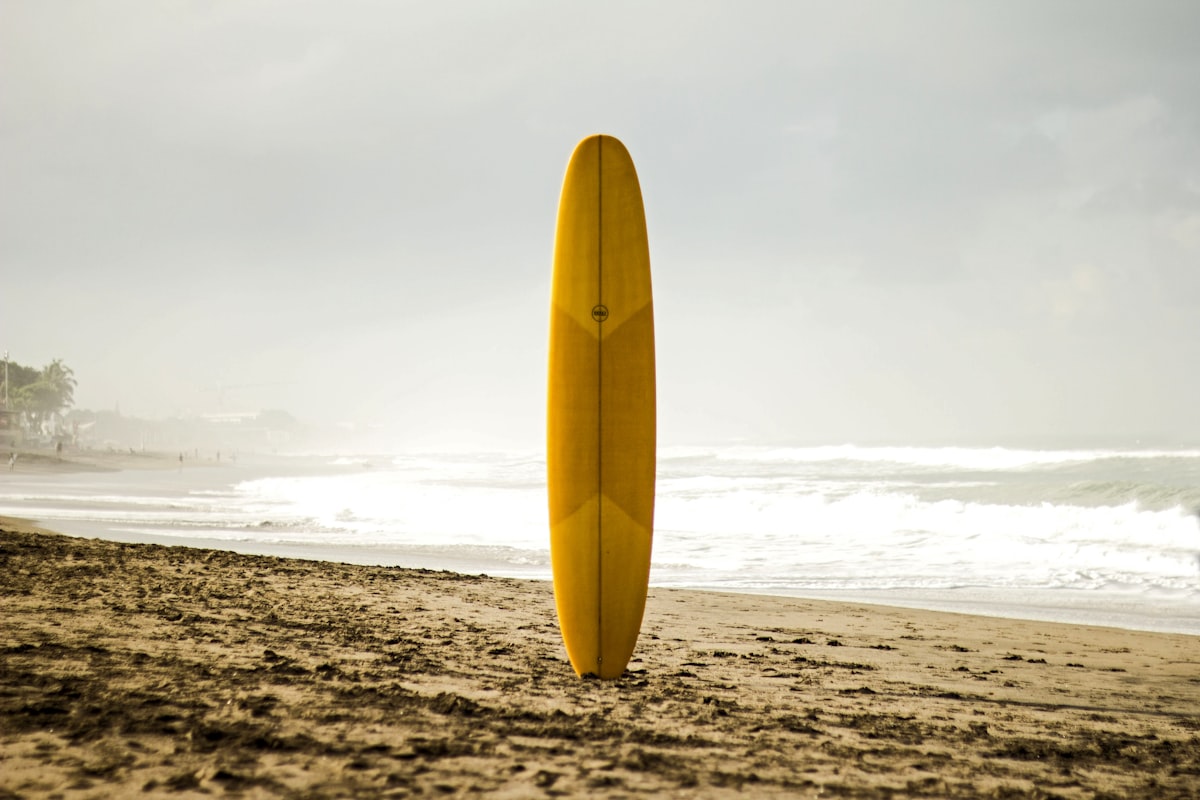
Why Nose Riding Is the Soul of Longboarding
A clean hang ten looks like it defies physics. It collaborates with it.
Nose riding is the centerpiece of traditional longboarding — walking the board into trim.
This guide covers everything you need to actually get to the nose and stay there: the gear, the wave, the footwork, and the common mistakes that keep most surfers pinned to the middle of their board forever.
What Nose Riding Actually Is (And Why It Works)
Nose riding is the act of walking to the front third of a longboard while the wave is breaking, then standing on or near the tip — either a "hang five" (five toes over) or a "hang ten" (both feet at the tip, ten toes over).
The trick isn't balance, at least not the way most people think. When you nose ride correctly, the wave is actually pinning the tail of the board down. The pocket — the steep, curling part of the wave just in front of the whitewater — pushes water up over the tail, while the nose of the board extends into the flat water ahead. The pressure differential locks the board in place. You don't really stand on the nose; the wave holds the tail, and the nose is simply where you happen to be standing.
This is why nose riding only works in very specific conditions. The wave has to be breaking behind you. If you walk forward on an unbroken wave, you'll just nose dive. Understanding this principle is the entire game.
Choosing the Right Board
You cannot nose ride a modern performance longboard. You can try. It won't happen.
Traditional Nose Riders vs. Performance Longboards
Traditional nose riders (often called "logs" or "classic logs") are designed specifically for this one task. They have:
- Length of 9'0" to 9'8" — enough to create a stable platform
- A wide nose (usually 18" or more) with concave on the bottom — the concave generates lift that helps the nose plane above the water
- A heavy tail with thick rails and significant volume — this is what gets pinned by the wave
- A single fin, usually 9" to 10", set well back in the tail
- 50/50 rails that are round and forgiving rather than hard and responsive
- Weight: a traditional log often weighs 15–20 pounds
Performance longboards (HPLBs) are built for the opposite priorities — turning, speed, maneuvers — and have thin rails, light construction, and 2+1 fin setups. You can walk forward on them, but you can't truly hang five without sinking the tail or pearling.
If you're serious about learning to nose ride, beg, borrow, or buy a proper log. Brands like Bing, Hobie, Harbour, Takayama, and Robert August make excellent traditional models. A used one in decent shape will cost $400–800 and will teach you more than ten new performance boards ever could.
Board Volume and Glide
Nose riding requires momentum. A board that doesn't glide between waves won't have the speed to get into waves early, and you need to be on your feet and trimming before the wave gets too critical. Heavy, high-volume logs paddle faster than they look — that mass carries momentum through flat spots and helps you catch waves earlier than anyone else in the lineup.

The Wave You Need
The second piece of the puzzle is wave selection. Nose riding works in a narrow band of conditions, and trying to do it outside that band will frustrate you indefinitely.
What Makes a Good Nose Riding Wave
- Slow, peeling waves — not fast, hollow, or wedging
- A defined pocket that breaks consistently down the line
- Shoulder-to-head-high size — big enough to have real push, small enough to stay mellow
- Long wave faces — you need time to walk, trim, hang, and walk back
- Soft breaking, not dumping — beach breaks that close out are your enemy
Point breaks are the classic nose riding environment. Think Malibu, San Onofre, Rincon on a mellow day, or any long, peeling reef point. Mushy, soft beach breaks can work too if they have a real corner to them. What you're looking for is a wave that you can ride for 15–30 seconds on one face, giving you time to actually walk forward, set up, and drop back.
Reading the Section
Not every part of a nose riding wave is a nose riding section. The moments when the wave is perfect for hanging five are short — often just three to six seconds within a longer ride. You're looking for the part of the wave where:
- The wall is breaking cleanly behind you
- The face is steep enough to have push, but not so steep that the board accelerates
- The section ahead is still open and clean
Learning to read these moments is most of the skill. You can have perfect footwork, but if you walk forward at the wrong time, you nosedive. If you walk forward too late, the wave has already flattened and the pocket won't hold you.
Setting Up the Ride
Before you even think about walking, you need to set up. Most failed nose rides are actually failed setups.
Catch the Wave Early and Angle
When you paddle into the wave, angle your takeoff along the line of the wave rather than paddling straight toward the beach. This lets you stand up already in trim, moving laterally down the line. A straight takeoff puts you on the face with no momentum — a sideways takeoff puts you ahead of the breaking section immediately.
Working on nose riding? Partner with Neptune on iPhone and Apple Watch.
Get on iOSPop Up Further Back Than You Think
Your feet should land well behind the middle of the board — maybe two-thirds of the way back. This anchors the tail and puts you in a position to drive forward when the wave opens up. Popping up too far forward is one of the most common beginner mistakes on a log.
Establish Trim First
Before doing anything fancy, get the board into trim — the sweet spot where it's gliding down the line without acceleration or deceleration. Weight should be evenly distributed, knees slightly bent, chest open and facing down the line. A longboard in trim feels like it's flying on autopilot. If you're pumping or wobbling, trim isn't established, and walking forward will only make things worse.

The Cross-Step: How to Actually Walk
You don't shuffle on a longboard. You cross-step. The cross-step is the elegant, efficient, controlled way to move forward on a log, and it's what separates trained longboarders from people who just stand on big boards.
Cross-Step Mechanics (Regular Foot)
Assuming you surf with your left foot forward:
- Your left (front) foot stays planted. From trim position, lift your right (back) foot and cross it in front of your left foot, placing it down a foot or two ahead.
- Now your right foot is the front foot. Lift your left foot, uncross it by stepping over and ahead of your right.
- Repeat. Each full sequence moves you about 12–18 inches forward.
- You should be moving in a fluid, dance-like motion — not hopping, not shuffling.
Where to Look
Eyes down the line — not at your feet. Once your feet know the pattern (and they will, with practice), you never need to look at them. Looking at your feet breaks your trim because it shifts your weight and kills your vision of the wave.
Practice on Land First
Seriously. Do it. Get your longboard on the grass or the carpet, stand in your surf stance, and practice cross-stepping forward and back for five minutes a day. Your body needs to memorize the pattern so it's automatic in the water. Most surfers try to learn cross-stepping in overhead conditions and never develop the muscle memory because every session is fight-or-flight. Land practice is free, safe, and it works.
Hanging Five (And Then Ten)
When you've cross-stepped forward and your front foot is within a foot of the nose, you're in position for a hang five.
Hang Five
Slide your front foot forward until five toes are hanging over the nose. Keep your back foot planted squarely on the board — that's your anchor. Your body position should be centered, slightly crouched, weight even. The illusion is that you're balancing on the tip; the reality is that your back foot is still doing 60% of the work.
Hold it. Even for one second counts as a hang five. The feeling — when the wave locks the tail and the board is fully planing on the nose — is unmistakable. People describe it as weightless or suspended. Once you've felt it, you understand why surfers spend decades chasing this.
Hang Ten
Hang ten requires that your back foot also move to the tip. This only works when the wave is holding the board with enormous authority — a steep, fast-breaking pocket pushing hard on the tail. Move the back foot up, both feet planted on the nose, all ten toes over the edge. It's rare. It's difficult. It's the pinnacle of the sport.
Most surfers never truly hang ten in real conditions. Hanging five is already an incredible achievement. Don't get too obsessed with the number — obsess with the feeling of trim.

Getting Back to the Tail
Walking forward is only half the ride. You also have to walk back — and you have to do it before the wave closes out, sections up, or tries to throw you into the flats.
The cross-step back to the tail is the same pattern in reverse. Cross one foot behind the other, uncross, repeat. As the wave section fades or the wall starts to steepen in front of you, step back to your driving position to set up your next turn or exit the wave cleanly.
Reading when to retreat is as important as reading when to advance. The tell-tale signs:
- The pocket softens and you feel the nose start to sink
- The wave section in front starts to close out
- You feel the board begin to decelerate
When any of those happen, walk back. Immediately. Trying to hold a nose ride through a dying section is how you eat it in spectacular, ego-destroying fashion.
Common Mistakes and How to Fix Them
1. Nosediving Every Time You Walk Forward
Cause: Walking forward on a wave that isn't steep enough to hold the tail. You're unweighting the back of the board before the wave can grip it.
Fix: Only walk forward when the wave is actively breaking behind you. The whitewater should be at or just past the tail. If the wave is still a glassy shoulder with nothing breaking, it's not a nose ride section yet.
2. The Board Slides Out From Under You
Cause: Going too fast. A single fin loses grip when you're flying down the line on a steep wave. Nose riders aren't speed demons — the whole point is to slow down and let the wave catch up to you.
Fix: Bottom turn higher on the wave. Stall the board if needed — drag your back foot in the water briefly, or shift your weight hard to the tail to bleed speed. A slow, deep trim line is much more nose-rideable than a fast, high line.
3. You Can Get to the Middle, But Not the Nose
Cause: Your board probably isn't a proper nose rider, or your wave selection is too fast. HPLBs and thin-rail logs are much harder to nose ride than classic single fins.
Fix: Try a borrowed log on a small, clean day. You'll be shocked at how much easier it is on the right equipment in the right conditions. If the board and wave aren't designed for this, no amount of technique will fix it.
4. You Can Hang Five for a Split Second, Then Lose It
Cause: You're muscling the position rather than trusting the wave to hold you. When beginners finally get to the nose, they often stiffen up, lean back, or try to balance with their arms, which breaks the natural pocket pressure.
Fix: Relax. Keep your knees soft. Trust that the wave is doing the work. The less you do, the longer you'll stay there.

How Long Until You Can Nose Ride?
Honestly? It depends. If you already surf well on a shortboard and you get a good log under your feet, you might hang five within a few sessions. If you're learning to surf on a longboard from scratch, plan on six months to a year of consistent surfing before the mechanics click.
The gating factor isn't strength or athleticism — it's wave reading. You can drill cross-stepping on land in a week. You can learn the theory in an afternoon. But recognizing the three-second window in a real wave when hanging five is actually possible? That takes repetition. Hundreds of waves. Maybe thousands.
A useful intermediate goal: get to the middle of the board consistently and stay there for a trim section. If you can do that, you're 80% of the way to nose riding. The last 20% is patience, right conditions, and the right stick.
A Session Built for Nose Riding Practice
On your next small, clean longboard day, structure a session around learning:
- Warm up with five waves of just establishing trim. No walking. Just stand up, find the sweet spot, glide down the line, and kick out cleanly. This rebuilds the base that nose riding sits on top of.
- Next five waves, cross-step to the middle of the board and back. Don't try to hit the nose — just practice the walking motion in real conditions.
- After that, start walking further. Commit to one wave at a time. Walk forward until you feel the nose start to lift; that's the pocket signaling you. If it doesn't lift, walk back and try again on the next wave.
- Don't count wipeouts. Every nosedive is information. You're learning the wave's threshold for holding you.
Nose riding rewards patience like no other discipline in surfing. A single clean hang five on a four-foot point break can make an entire season. When you feel it for the first time — the board suspended, the wave doing the work, your toes over the edge — you'll understand why surfers have chased this exact sensation for sixty years.
Walk softly. Trim deep. The nose is waiting.
Read it. Then take it to the water.